Trigonostylops
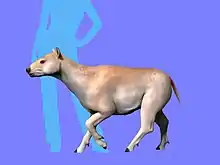
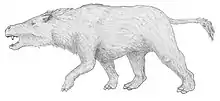
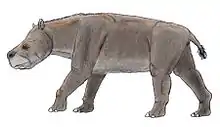
Trigonostylops is an extinct genus of South American meridiungulatan ungulate, from the Late Paleocene to Late Eocene (Itaboraian to Tinguirirican in the SALMA classification) of South America (Argentina and Peru) and Antarctica (Seymour Island). It is the only member of the family Trigonostylopidae.
| Trigonostylops | |
|---|---|
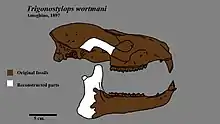 | |
| Skull restoration of Trigonostylops | |
Scientific classification  | |
| Kingdom: | Animalia |
| Phylum: | Chordata |
| Class: | Mammalia |
| Order: | †Astrapotheria |
| Family: | †Trigonostylopidae |
| Genus: | †Trigonostylops Ameghino 1897 |
| Type species | |
| Trigonostylops wortmani Ameghino 1897 | |
| Species | |
| |
Description
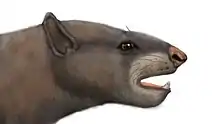
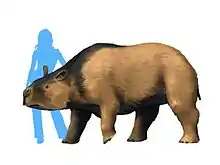
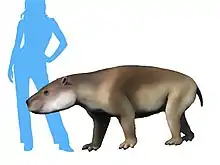
A complete skull of the type species, T. wortmani, has been found, and it has been classified as an astrapothere based on its large lower tusks. In comparison with the later Astrapotherium magnum, it is estimated to have been around 1.50 metres (4.9 ft) long.[1] Teeth, primarily molars, have been found and assigned to other species.
Phylogeny
Cladogram based in the phylogenetic analysis published by Vallejo Pareja et al., 2015, showing the position of Trigonostylops:[2]
|
Eoastrapostylops | |||||||||||||||||||||||||||||||||||||||||||||||||||||||||||||||||||||||||||||||
| |||||||||||||||||||||||||||||||||||||||||||||||||||||||||||||||||||||||||||||||
Distribution
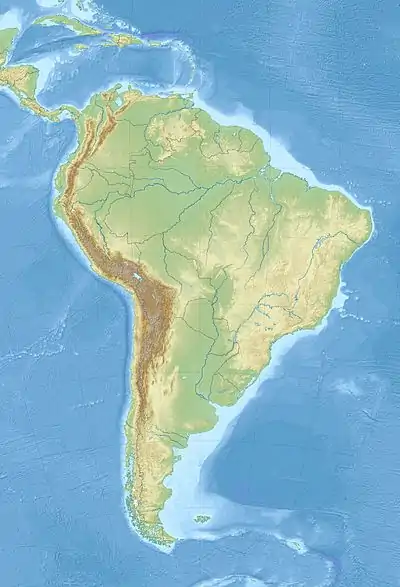


Locations of Trigonostylops fossils
Pozo Formation Sarmiento Formation Las Flores FormationNot show: La Meseta Formation in Seymour Island, Antarctica
Fossils of Trigonostylops have been found in:[3]
- Paleocene
- Eocene
References
 |
Wikimedia Commons has media related to Trigonostylops. |
- Palmer, D., ed. (1999). The Marshall Illustrated Encyclopedia of Dinosaurs and Prehistoric Animals. London: Marshall Editions. p. 249. ISBN 978-1-84028-152-1.
- Vallejo Pareja et al., 2015
- Trigonostylops at Fossilworks.org
- Goin et al., 2009
- Dzik & Gaździcki, 2001
- Vera, 2012
- Cifelli, 29185, p.5
- Antoine et al., 2011
Bibliography
- ; ; ; ; ; ; ; , and . 2011. Middle Eocene rodents from Peruvian Amazonia reveal the pattern and timing of caviomorph origins and biogeography. Proceedings of the Royal Society B 279. 1319–1326. Accessed 2019-02-14.
- . 1985. Biostratigraphy of the Casamayoran, Early Eocene of Patagonia. American Museum Novitates 2820. 1–26. Accessed 2019-02-14.
- , and . 2001. The Eocene expansion of nautilids to high latitudes. Palaeogeography, Palaeoclimatology, Palaeoecology 172. 297–312. Accessed 2019-02-14.
- ; ; , and . 2009. Earliest South American paucituberculatans and their significance in the understanding of ‘pseudodiprotodont’ marsupial radiations. Zoological Journal of the Linnean Society 155. 867–884. Accessed 2019-02-14.
- ; ; ; ; , and . 2015. Hilarcotherium castanedaii, gen. et sp. nov., a new Miocene astrapothere (Mammalia, Astrapotheriidae) from the Upper Magdalena Valley, Colombia. Zurich Open Repository and Archive, University of Zurich _. 1–14. Accessed 2019-02-14.
- . 2012. Revisión del género Transpithecus Ameghino, 1901 (Notoungulata, Interatheriidae) del Eoceno medio de Patagonia, Argentina. Ameghiniana 49. 60–74. Accessed 2019-02-14.
Genera of South American native ungulates | |||||||||||||||||||||||||||||||||||||||||||||||||||||||||||||||||||||||||||||
|---|---|---|---|---|---|---|---|---|---|---|---|---|---|---|---|---|---|---|---|---|---|---|---|---|---|---|---|---|---|---|---|---|---|---|---|---|---|---|---|---|---|---|---|---|---|---|---|---|---|---|---|---|---|---|---|---|---|---|---|---|---|---|---|---|---|---|---|---|---|---|---|---|---|---|---|---|---|
| |||||||||||||||||||||||||||||||||||||||||||||||||||||||||||||||||||||||||||||
| |||||||||||||||||||||||||||||||||||||||||||||||||||||||||||||||||||||||||||||
| |||||||||||||||||||||||||||||||||||||||||||||||||||||||||||||||||||||||||||||
| |||||||||||||||||||||||||||||||||||||||||||||||||||||||||||||||||||||||||||||
.jpg.webp)