Proterotheriidae
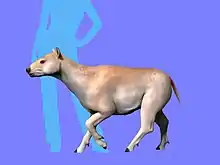
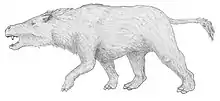
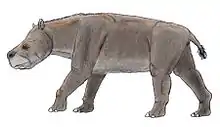
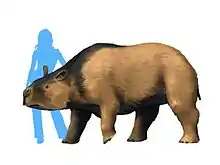
Proterotheriidae is an extinct family of fossil ungulates from the Cenozoic era that displays toe reduction. Despite resembling primitive, small horses, they were only distantly related to them, and instead belonged to the native South American ungulate order Litopterna.
| Proterotheriidae | |
|---|---|
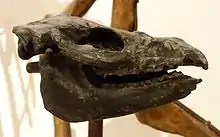 | |
| Skull of Thoatherium | |
Scientific classification  | |
| Kingdom: | Animalia |
| Phylum: | Chordata |
| Class: | Mammalia |
| Order: | †Litopterna |
| Superfamily: | †Proterotherioidea |
| Family: | †Proterotheriidae Ameghino 1887 |
| Synonyms | |
| |
Description
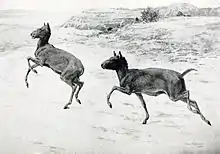
Two subfamilies and 18 genera of Proterotheriidae are known. All forms were small or medium-sized. Typical is a reduction of the number of toes and brachydont or mesodont teeth. The family is recorded since the late Palaeocene. Various fossils are known from many parts of the South American continent. The diversity decreased in the Miocene to Pliocene and it has been assumed for a long time that they entirely disappeared in the late Pliocene. However, fossils found in Argentina, Brazil and Uruguay show that one member of the group, Neolicaphrium recens survived into the Late Pleistocene.[1][2][3]
Better known genera of the family include Diadiaphorus and Thoatherium from the Miocene.[1]
Taxonomy
- Proterotheriidae[4]
- Epecuenia
- Prothoatherium?
- Anisolambda
- Anisolophus
- Brachytherium
- Diadiaphorus
- Eoauchenia
- Epitherium
- Lambdaconus
- Mesolicaphrium
- Neobrachytherium
- Neodolodus
- Neolicaphrium
- Olisanophus
- Paramacrauchenia
- Paranisolambda
- Picturotherium
- Proterotherium
- Protheosodon
- Tetramerorhinus
- Thoatherium
- Thoatheriopsis
- Villarroelia
- Uruguayodon
- Megadolodinae
- Indet.
- Deuterotherium?
- Diplasiotherium
- Eoproterotherium
- Licaphrium
- Prolicaphrium
- Protheosodon
- Richardolydekkeria
- Wainka
- Xesmodon
Proterotheriidae was redefined by McGrath and colleagues in 2019 to be all taxa closer to Tetramerorhinus than Macrauchenia, Tricoelodus or Protolipterna.[4] The cladogram below shows the modified results of their phylogenetic analysis, where incomplete taxa were placed based on morphology. The clade Anisolambdinae or Anisolambdidae is highlighted in pink, an unrelated group of proterotheriids, and the clade Indaleciinae is highlighted in green.[5]
| Proterotheriidae |
| |||||||||||||||||||||||||||||||||||||||||||||||||||||||||||||||||||||||||||||||||||||||||||||||||||||||||||||||||||||||||||||||||||||||||||||||||||||||||||||||||||||||||||||||||||||||||||||||||||||||||||||||||||||||||||
References
 |
Wikimedia Commons has media related to Proterotheriidae. |
- Scherer, C.; Pitana, V.; Ribeiro, A. M. (2009). "Proterotheriidae and Macraucheniidae (Litopterna, Mammalia) from the Pleistocene of Rio Grande do Sul State, Brazil". Revista Brasileira de Paleontologia. 12 (3): 231–246. doi:10.4072/rbp.2009.3.06.
- Ubilla, M.; Perea, D.; Bond, M.; Rinderknecht, A. (2011). "The first cranial remains of the Pleistocene proterotheriid Neolicaphrium Frenguelli, 1921 (Mammalia, Litopterna): a comparative approach". Journal of Vertebrate Paleontology. 31 (1): 193–201. doi:10.1080/02724634.2011.539647.
- Gaudioso, P. J.; Gasparini, G. M.; Herbst, R.; Barquez, R. M. (2017). "First record of the Neolicaphrium recens Frenguelli, 1921 (Mammalia, Litopterna) in the Pleistocene of Santiago del Estero Province, Argentina". Papéis Avulsos de Zoologia. 57 (31): 23–29.
- McGrath, A.J.; Flynn, J.J.; Wyss, A.R. (2019). "Proterotheriids and macraucheniids (Litopterna: Mammalia) from the Pampa Castillo Fauna, Chile (early Miocene, Santacrucian SALMA) and a new phylogeny of Proterotheriidae". Journal of Systematic Palaeontology: 1–22. doi:10.1080/14772019.2019.1662500.
- Andrew J. McGrath; Federico Anaya; Darin A. Croft (2020). "New proterotheriids (Litopterna, Mammalia) from the middle Miocene of Quebrada Honda, Bolivia, and trends in diversity and body size of proterotheriid and macraucheniid litopterns". Ameghiniana. 57 (2): 159–188. doi:10.5710/AMGH.03.03.2020.3268.
Genera of South American native ungulates | |||||||||||||||||||||||||||||||||||||||||||||||||||||||||||||||||||||||||||||
|---|---|---|---|---|---|---|---|---|---|---|---|---|---|---|---|---|---|---|---|---|---|---|---|---|---|---|---|---|---|---|---|---|---|---|---|---|---|---|---|---|---|---|---|---|---|---|---|---|---|---|---|---|---|---|---|---|---|---|---|---|---|---|---|---|---|---|---|---|---|---|---|---|---|---|---|---|---|
| |||||||||||||||||||||||||||||||||||||||||||||||||||||||||||||||||||||||||||||
| |||||||||||||||||||||||||||||||||||||||||||||||||||||||||||||||||||||||||||||
| |||||||||||||||||||||||||||||||||||||||||||||||||||||||||||||||||||||||||||||
| |||||||||||||||||||||||||||||||||||||||||||||||||||||||||||||||||||||||||||||
.jpg.webp)