Radical 16
Radical 16 or radical table (几部), meaning small table, is one of 23 of the 214 Kangxi radicals that are composed of 2 strokes.
| 几 | ||
|---|---|---|
| ||
| 几 (U+51E0) "small table" | ||
| Pronunciations | ||
| Pinyin: | jī | |
| Bopomofo: | ㄐ一 | |
| Wade–Giles: | chi1 | |
| Cantonese Yale: | gei1 | |
| Jyutping: | gei1 | |
| Pe̍h-ōe-jī: | kí | |
| Japanese Kana: | キ ki (on'yomi) つくえ tsukue (kun'yomi) | |
| Sino-Korean: | 궤 gwe | |
| Names | ||
| Chinese name(s): | (Surrounding) 几字頭/几子头 jīzìtóu (Bottom) 几字底 jīzìdǐ | |
| Japanese name(s): | 机/つくえ tsukue 几繞/きにょう kinyō 几構/きがまえ/つくえがまえ kigamae/tsukuegamae 風構/かぜがまえ/かざがまえ kazegamae/kazagamae | |
| Hangul: | 안석 anseok | |
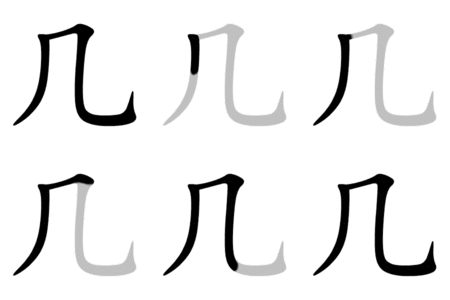
| Stroke order animation | ||
 | ||
几 is also the 16th indexing component in the Table of Indexing Chinese Character Components predominantly adopted by Simplified Chinese dictionaries published in mainland China. 𠘨 is an associated indexing component affiliated to the principal component 几. In addition, the identical character 几 used in Simplified Chinese for 幾 jǐ used to ask "how many" for small amounts or to mean "a few, some, almost, nearly" does not have any historical connection to the "table" character.
Evolution
 Chu bamboo and slip script character
 Shuowen seal script character
 Liushutong character
Derived characters
| Strokes | Characters |
|---|---|
| +0 | 几 |
| +1 | 凡 凢 (=凡) 凣 (=凡) |
| +2 | 凤SC (=鳳 -> 鳥) |
| +3 | 凥 処JP (=處 -> 虍) 凧JP |
| +4 | 凨 (=風 -> 風) 凩JP 凪JP 凫SC (=鳧 -> 鳥) |
| +5 | 凬 |
| +6 | 凭 凮 凯SC (=凱) |
| +7 | 巬 |
| +9 | 凰 |
| +10 | 凱 凲 |
| +12 | 凳 凴 (=憑 -> 心) |
Literature
- Fazzioli, Edoardo (1987). Chinese calligraphy : from pictograph to ideogram : the history of 214 essential Chinese/Japanese characters. calligraphy by Rebecca Hon Ko. New York: Abbeville Press. ISBN 0-89659-774-1.
- Leyi Li: “Tracing the Roots of Chinese Characters: 500 Cases”. Beijing 1993, ISBN 978-7-5619-0204-2
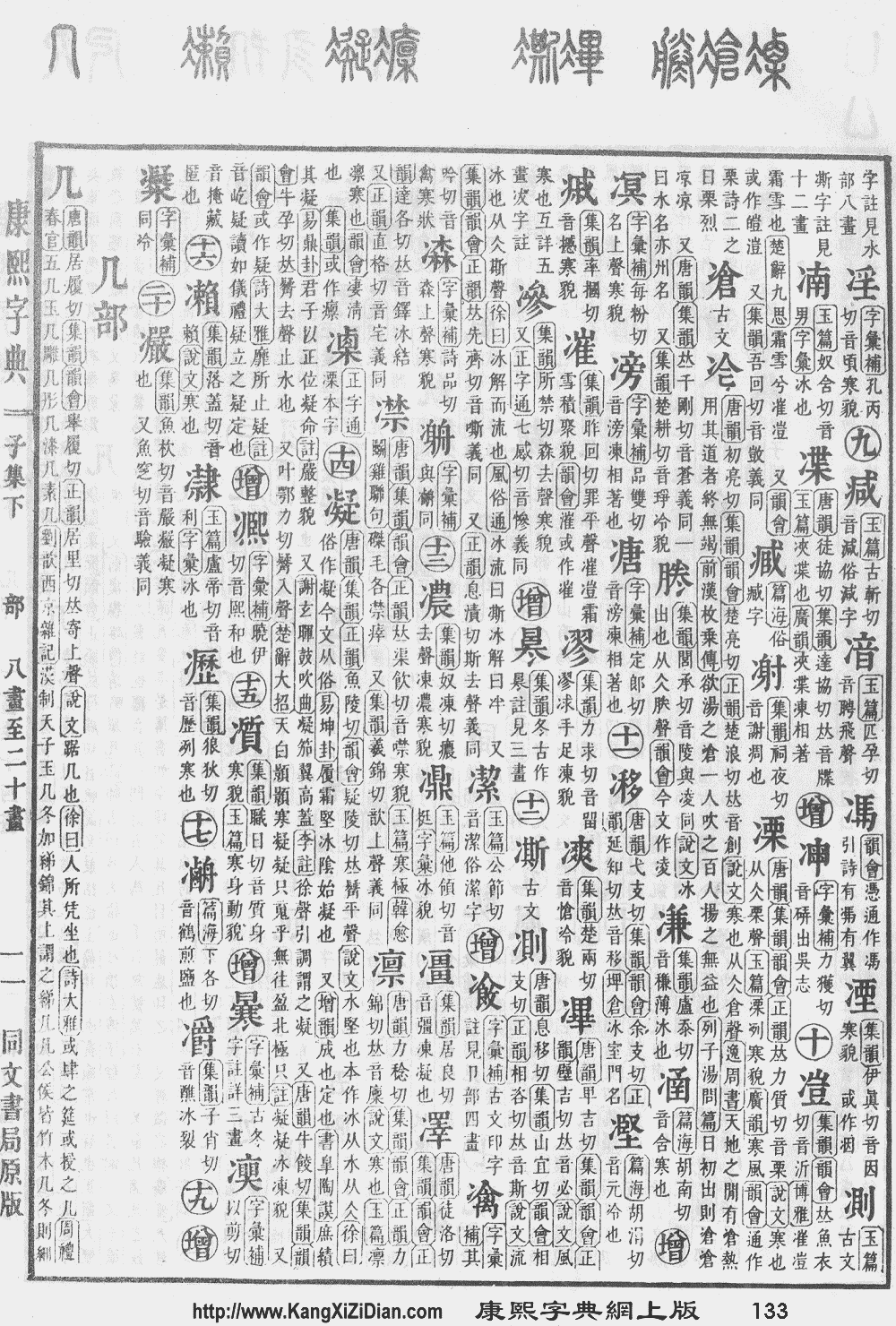
- KangXi: page 133, character 16

This article is issued from Wikipedia. The text is licensed under Creative Commons - Attribution - Sharealike. Additional terms may apply for the media files.